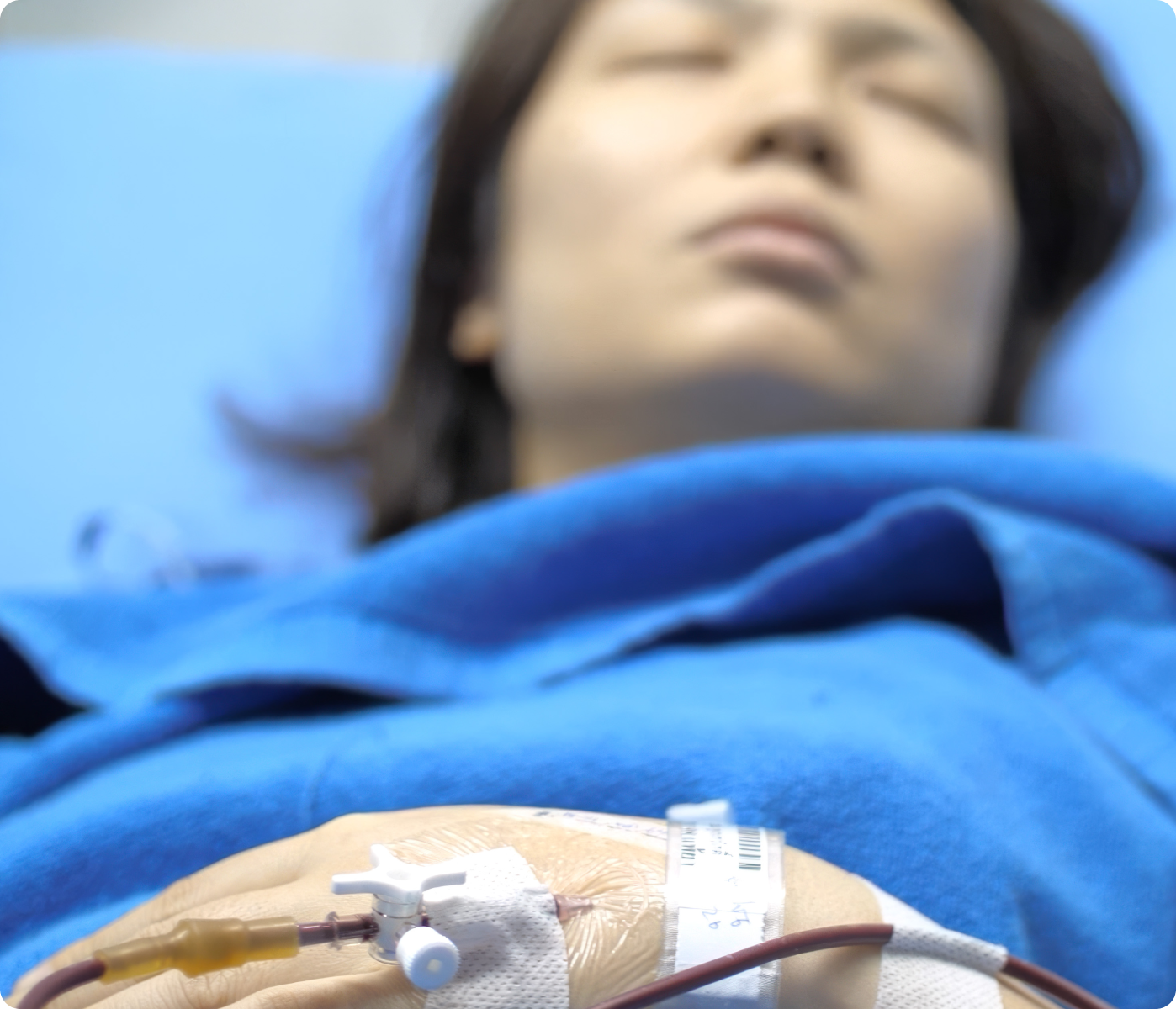
When addressing bleeding in patients with CFD, fibrinogen replacement therapy is the cornerstone of care.1 Three options are available: fibrinogen concentrate, cryoprecipitate, and fresh frozen plasma (FFP).1

Fibrinogen concentrate

Advantages

  • Provides a predictable and rapid increase in plasma fibrinogen1
  • Low content of other procoagulant factors1
  • Small reconstitution volume reduces risk of circulatory overload1
  • Streamlined administration fits intraoperative and emergency workflows1
  • Undergoes extensive viral clearance processes2

Limitations

  • High acquisition cost3
  • Limited access due to financial constraints or availability3

  • Not indicated for dysfibrinogenemia4

  • Risk of hypersensitive reactions1

Cryoprecipitate and FFP

Advantages

  • Familiarity with and comfort of use3
  • Hemostatic benefits of VWF, Factor XIII, and fibronectin3
  • FFP contains calibrated content per each 300 mL unit1

Limitations

  • Requires thawing, which can impact time to infusion2
  • Variable fibrinogen content per unit makes dosing less predictable1
  • Risk of transfusion-related complications and larger infusion volumes, increasing the risk of volume overload1
  • Pathogen transmission risks associated with its administration5
  • May contain varying fibrinogen levels5

Recommended fibrinogen levels

ACUTE BLEEDING1

  • Target a peak fibrinogen activity of ≥150 mg/dL in patients with afibrinogenemia or severe hypofibrinogenemia (fibrinogen <50 mg/dL)
  • After achieving hemostasis, maintain a minimum fibrinogen level of 100 mg/dL until complete hemostasis and ≥50 mg/dL throughout wound healing

SURGERY1

  • For minor and major surgery,* fibrinogen supplementation aiming for peak fibrinogen activity >150 mg/dL
  • Subsequent dosing is based on clinical evolution, aiming for a trough fibrinogen activity between 50 mg/dL and 100 mg/dL until wound healing

PREGNANCY1

For moderate and mild hypofibrinogenemia with bleeding phenotype at delivery, fibrinogen supplementation aiming for peak fibrinogen activity >150 mg/dL in women with bleeding phenotype

*Major surgery is defined as most orthopedic, abdominal, gynecologic, urologic, neurologic, thoracic, vascular, gastrointestinal, and otolaryngologic procedures. All other surgical procedures, including dental extractions, are considered minor.1

Get more information about CFD, management options, and treatment advancements.

Stay informed

References

  1. Casini A. How I treat quantitative fibrinogen disorders. Blood. 2025;145(8):801-810.
  2. Grottke O, Mallaiah S, Karkouti K, Saner F, Haas T. Fibrinogen supplementation and its indications. Semin Thromb Hemost. 2020;46(1):38-49.
  3. Hensley NB, Mazzeffi MA. Pro con debate: fibrinogen concentrate or cryoprecipitate for treatment of acquired hypofibrinogenemia in cardiac surgical patients. Anesth Analg. 2021;133(1):19-28. 
  4. May JE, Wolberg AS, Lim MY. Disorders of fibrinogen and fibrinolysis. Hematol Oncol Clin North Am. 2021;35(6):1197-1217.
  5. Stanford S, Roy A, Cecil T, et al. Differences in coagulation relevant parameters: comparing cryoprecipitate and a human fibrinogen concentrate. PLoS One. 2023;18(8):e0290571.